The 36th São Paulo Biennial Brings Imran Mir to Santiago
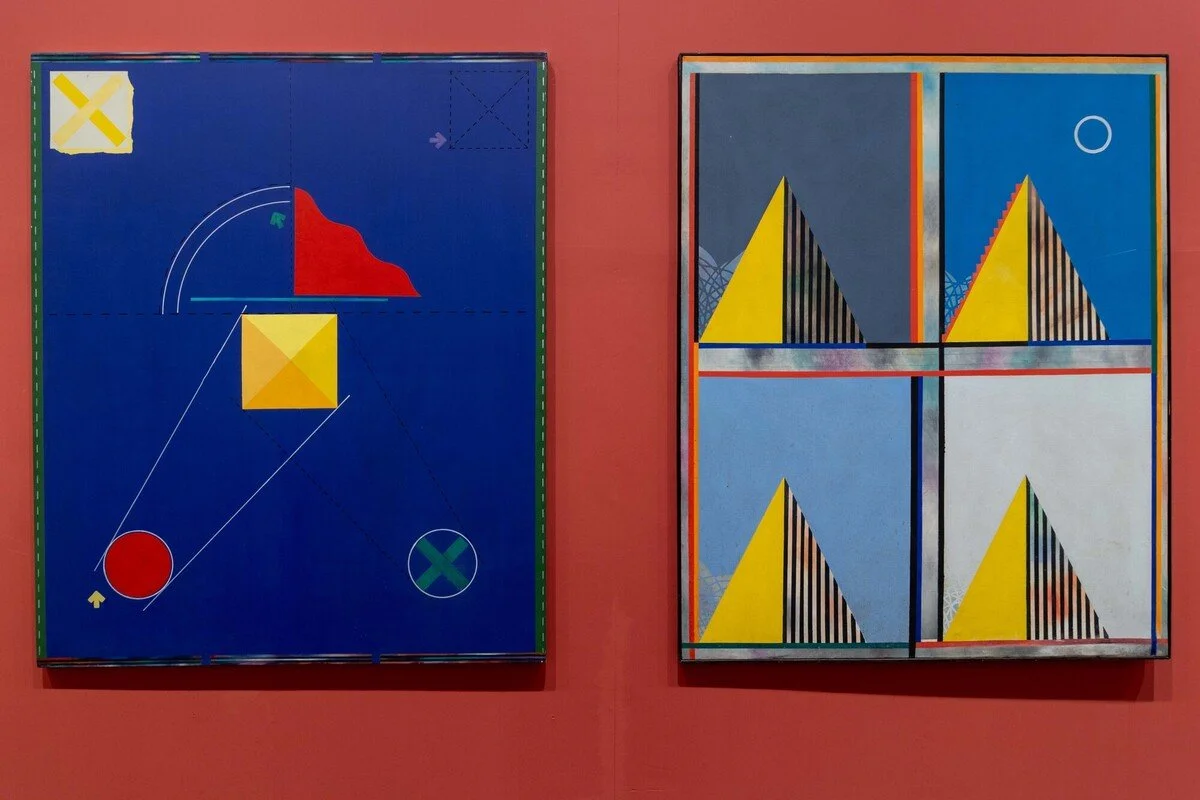
Natt Fejfar / Fundação Bienal de São Paulo (black, blue, and yellow geometric works)
A traveling edition of the 36th Bienal de São Paulo has arrived in Chile, and the work of Imran Mir (1950–2014) is among it. The exhibition runs at the Centro Cultural La Moneda in Santiago from July 3 to October 4, 2026, with free admission throughout.
Santiago is the tour's first international stop and its only one in South America. Before reaching Chile, the traveling edition moved through the Brazilian cities of Fortaleza, Rio de Janeiro, Santos, Brasília, and Curitiba. After Santiago it continues to Mexico and Berlin.
Nineteen artists, four continents
The Santiago presentation gathers more than 110 works by 19 artists from Africa, Asia, Europe, and Brazil, spanning photography, painting, ceramics, installation, assemblage, and sculpture. Mir appears alongside international figures including Malika Agueznay, Mao Ishikawa, Forugh Farrokhzad, Julianknxx, Théodore Diouf, and the collective Forensic Architecture/Forensis.
The show carries the vision of the full Bienal, whose main edition ran from September 6, 2025 to January 11, 2026 at the Ciccillo Matarazzo Pavilion in São Paulo. Bonaventure Soh Bejeng Ndikung, the Bienal's general curator, also curated the traveling exhibition in Santiago. It is supported by Bloomberg Philanthropies and the São Paulo Biennial Foundation, and installed at La Moneda, the cultural center set beneath Chile's government palace in the heart of Santiago.
What the Bienal saw in his work
The Bienal commissioned a curatorial text on Mir by André Pitol. It frames his practice as a way to test the limits of the modernist project, a project that remains central to Brazil's own architectural imagination. Pitol traces Mir's investigation of modernism, abstraction, and minimalism across New York, Toronto, and above all Karachi, and reads it as a practice that sits outside the Western genealogy of art.
That reading gains force from the room itself. Pitol notes how Mir's large, saturated compositions press against the white modernist Pavilion designed by Oscar Niemeyer, surfacing colonial histories that the building's clean lines tend to hide. Quoting curator Amal Alhaag, the text describes work in which "color is the master of the ceremony" while the lines form a chorus.

A selection from Imran Mir’s ‘Seventh Paper on Modern Art’
Papers on Modern Art
Mir organized his life's work as Papers on Modern Art (1976–2014), twelve numbered series of paintings, sculptures, and installations, each treated with the seriousness of a theoretical paper. The idea was cumulative. One form led to the next, and no paper was ever a final version.
His presentation at the São Paulo edition drew on this body of work, anchored by the Seventh Paper on Modern Art (1987): geometric abstractions in yellow triangular forms with linear striations, set against deep purples and earth tones and held inside his signature colored borders. Critics have called these works metaphysical statements and cosmic paintings built around vast emptiness. A selection from the Bienal now travels on to Santiago.
A theme that fit him
The Bienal takes its title, Not All Travellers Walk Roads – Of Humanity as Practice, from a poem by Afro-Brazilian writer Conceição Evaristo. Its guiding question, what it means to be human, treats humanity not as a fixed condition but as a practice shaped by memory, encounter, and dignity.
Mir's own words sit easily inside that frame. As he once put it, "The absence of these rules is what I wish to share with others, so they will not hesitate to reach within themselves and find their real selves."
Visit the exhibition
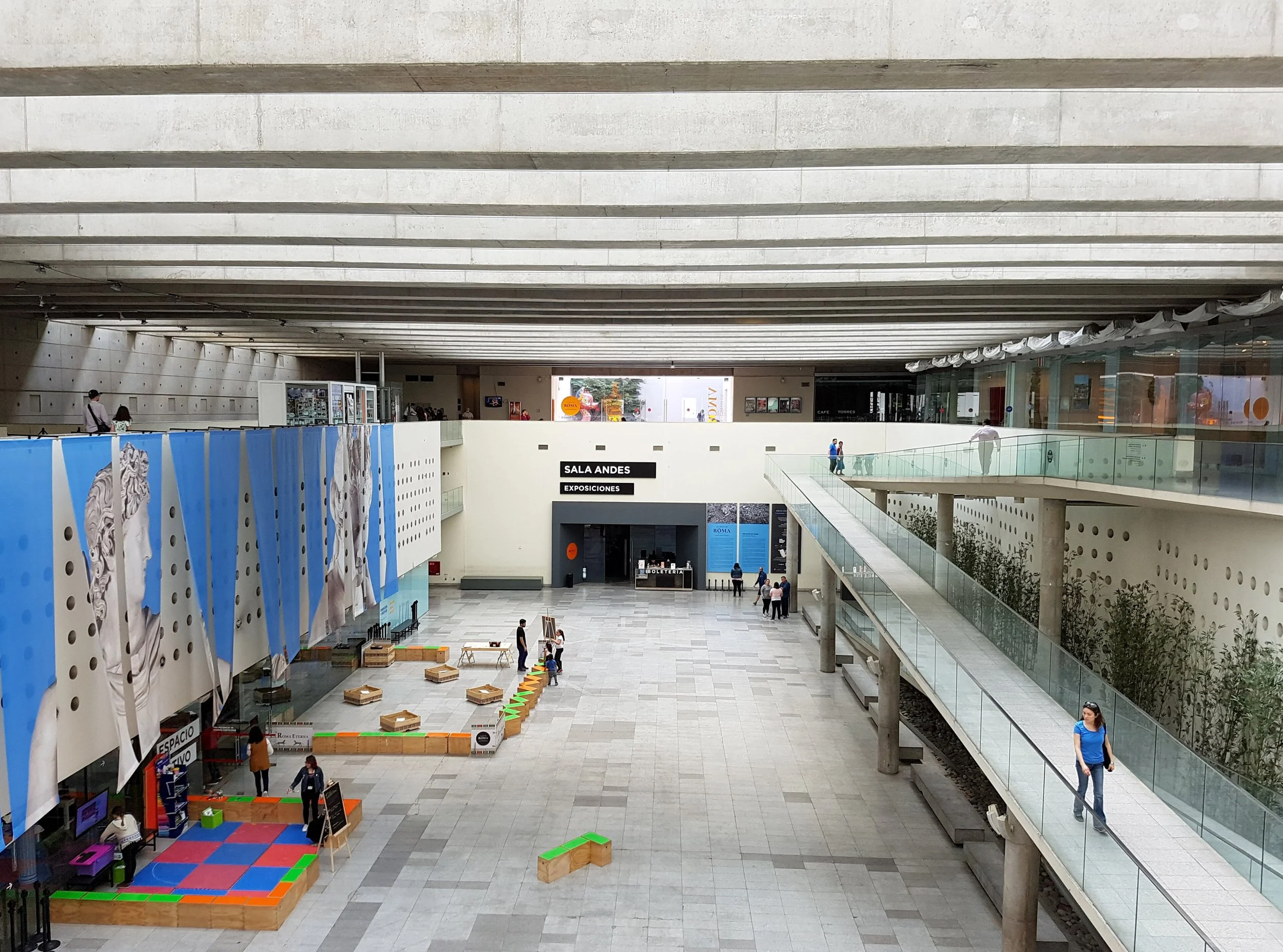
36th Bienal de São Paulo, Traveling Edition Not All Travellers Walk Roads – Of Humanity as Practice Centro Cultural La Moneda, Santiago, Chile July 3 to October 4, 2026 Free admission